Expert-led service work has to be findable, trustworthy, and careful before it asks for contact.
Prospective therapy clients are not browsing casually. They are trying to decide whether it is safe to reach out. The work had to make the practice easier to understand across the owned site, search results, public profiles, and AI-assisted discovery without turning care into a sales pitch.
01
The situation
Lynne already had real credibility across public profiles, directories, credentials, and referrals. The problem was control: search engines, AI assistants, and cautious prospective clients could meet fragmented third-party snippets before they found the clearest owned explanation.
02
The diagnosis
We audited the old public presence, found gaps in local specialty pages, inquiry safety, profile consistency, metadata, schema, and AI retrieval, then prioritized the fixes that would make the practice easier to find and safer to contact.
03
The build
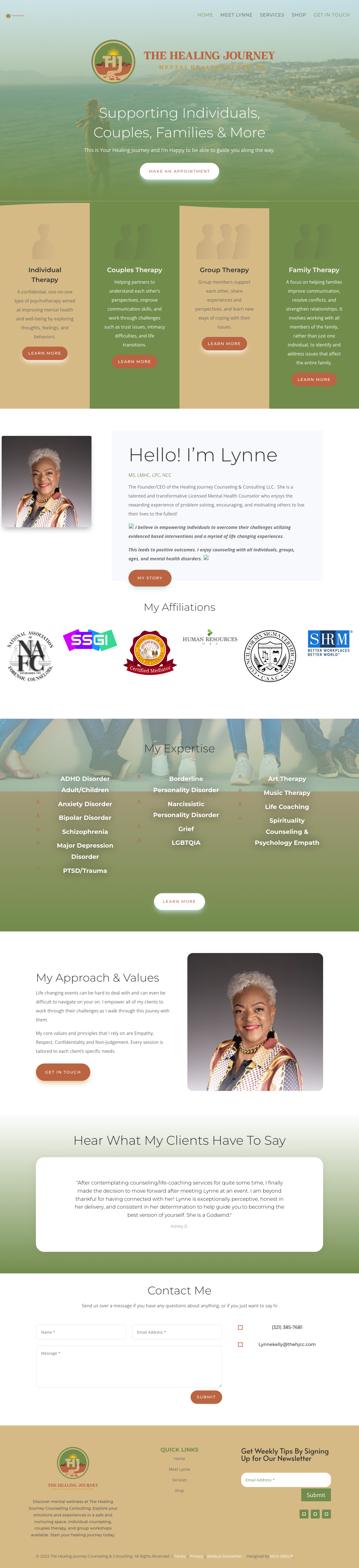
The shipped foundation includes the redesigned site, clinician bio, resources page, contact path, local service pages for priority care lanes, structured data, sitemap support, canonical metadata, and a working inquiry route.
04
The visibility layer
We also ran search and AI visibility checks across branded and local-care prompts. The honest read: the owned foundation became much stronger, while profile governance and answer-first resources remained the next sprint.
05
The conversion path
Being easy to find is only half the job. We engineered the next step: one clear ask, Request a Consultation, repeated across every page, a sticky bar that keeps it one tap away, and a free fifteen-minute consultation that makes the first message easy to send.